Transforming Global Supply Chains: The Strategic Role of Global Logistics Properties
When we speak of global logistics properties, we refer to large-scale industrial real estate assets that support the storage, movement, and distribution of goods across regions and around the world. These properties include warehousing, fulfilment centres, cross-docking terminals, last-mile delivery hubs, and large logistics parks. Their strategic importance has soared in recent years as e-commerce, global supply chains, and on-demand delivery become ever more central to business operations.
These properties often sit at the intersection of real estate, logistics operations, and technology. For example, GLP Pte Ltd. (formerly known as Global Logistic Properties Limited) invests and operates across logistics real-estate, digital infrastructure and renewable energy in markets such as China, Brazil, India, the US, Europe and Japan. These firms are increasingly about more than just land and buildings; they’re about enabling supply-chain resilience, speed, scalability and sustainability.
With globalisation and digital commerce, logistics real estate has shifted from commodity space to a strategic asset. Location, connectivity (to ports, airports, highways), building design (clear heights, bay depths, flexibility), and technology integration matter immensely. These properties form the backbone of how goods flow from raw materials to finished products to the consumer’s doorstep.
Why Global Logistics Properties Matter
Global logistics properties matter for several reasons:
First, they support scale. In a world where supply chains stretch across continents, having large, modern, well-connected facilities enables companies to store and move goods efficiently. Without the right property infrastructure, delays, bottlenecks and higher costs become inevitable.
Second, they enable speed and flexibility. For an e-commerce business or a manufacturing supply chain, access to strategically located logistics parks or last-mile hubs can reduce lead times, reduce shipping costs, and improve customer service. Logistics real estate is a key enabler for on-demand economies.
Third, they contribute to supply-chain resilience. As firms face disruptions, whether from pandemics, natural disasters, geopolitical events or labour shortage, having a distributed network of high-quality logistics properties helps mitigate risks. Instead of relying on a single country or region, a global portfolio of logistics properties provides flexibility and backup.
Fourth, these properties increasingly incorporate advanced building design and technology to deliver sustainability, energy efficiency, automation and data connectivity. This ensures they are not just storage spaces, but smart operational assets.
Key Characteristics of Leading Logistics Properties
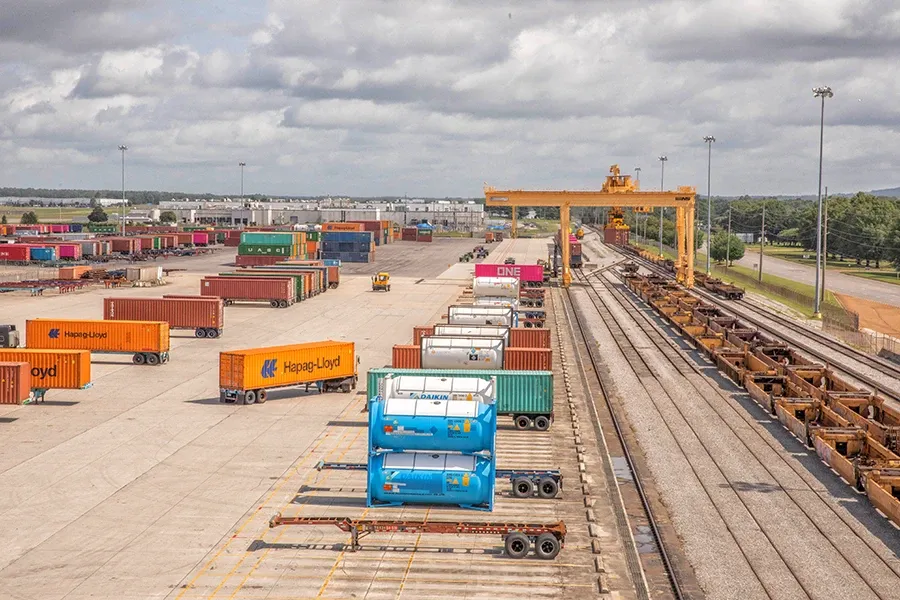
To perform effectively, logistics properties often share the following characteristics:
- Location & connectivity – Top properties are near major transport nodes (ports, airports, rail, highways), enabling efficient movement of goods. Proximity to population centres helps with last-mile delivery.
- Building specifications – These include high clear-height ceilings (for vertical storage), deep floorplates (to accommodate large racking systems), multiple dock doors, good manoeuvring space for trucks, and robust structural loading capacity.
- Flexibility & scalability – The ability to adapt for different tenants, multiple uses (storage, distribution, fulfilment), and to scale up as demand changes is crucial.
- Technology integration – Modern logistics properties include automation (conveyors, robotics, warehouse management systems), connectivity (IoT sensors, data analytics), and sometimes renewable energy (solar panels, energy-efficient design). For example, GLP describes its buildings as “designed to create value, drive efficiency while helping customers achieve their sustainability goals.”
- Sustainability & ESG considerations – Logistics real-estate owners increasingly address energy usage, water conservation, carbon footprint and sustainable construction. Green buildings and certifications become differentiators.
Real-World Example Use Cases
Example 1: A global logistics park by GLP
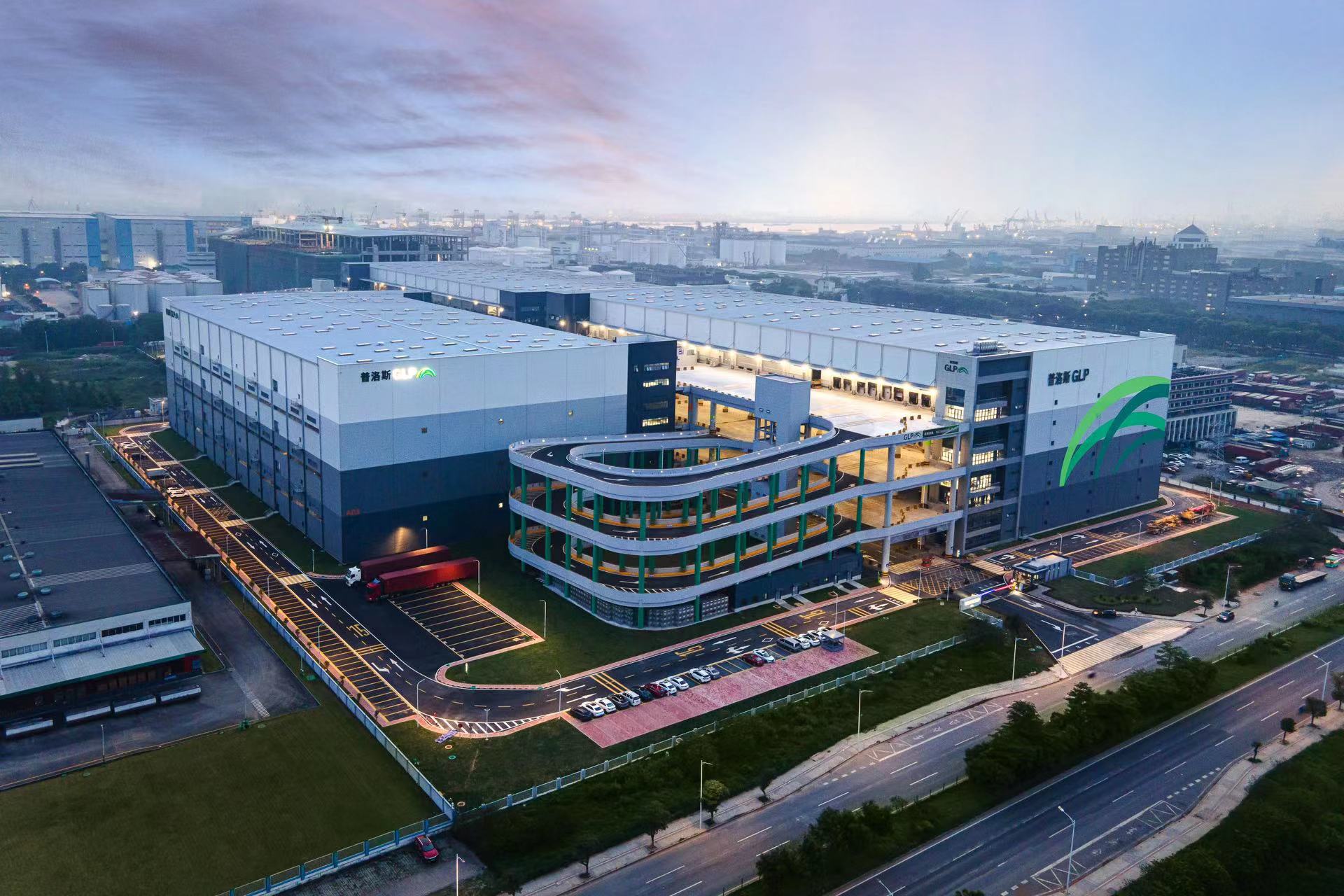 One strong example is the portfolio of GLP. According to its profile, GLP manages more than 84 million m² of real estate across China, Brazil, India, Japan, the U.S., Europe and Vietnam.
Within this large portfolio, GLP develops and operates logistics parks that include large warehouses, distribution centres, and last-mile hubs. These properties serve e-commerce companies, third-party logistics providers (3PLs), retailers and manufacturers. For instance, a warehouse in China may handle inbound container shipments, store goods for an e-commerce platform, then dispatch same-day or next-day to consumers in that region. In India or Brazil, similar logistics parks support importers, domestic manufacturing and cross-border flows.
The relevance: by offering global logistics properties in multiple countries, GLP enables companies to deploy supply-chain strategies with geographic diversification, capture emerging-market growth, and manage risk across regions.
Example 2: Last-mile delivery hub in a major urban region

Another example: A last-mile delivery hub situated inside or near a major metropolitan area. These properties are smaller in footprint compared to large warehousing parks in suburban locations, but are strategically situated to meet consumer demand quickly.
Imagine a property located within 10 km of a major city centre. An e-commerce firm utilises that facility to receive goods from upstream regional warehouses overnight, sort them for urban delivery, and dispatch them via vans, bikes or even drones to customers the same day. The property may include sorting equipment, lockers for pickup, and connectivity to apps/IT systems to optimise delivery routes.
The relevance: global logistics properties aren’t only about massive warehouses in industrial zones; they also include urban logistics nodes that support the “last mile”. These are vital in modern supply chains where consumer expectations demand speed, reliability and convenience.
Example 3: Multi-modal logistics terminal supporting international flows
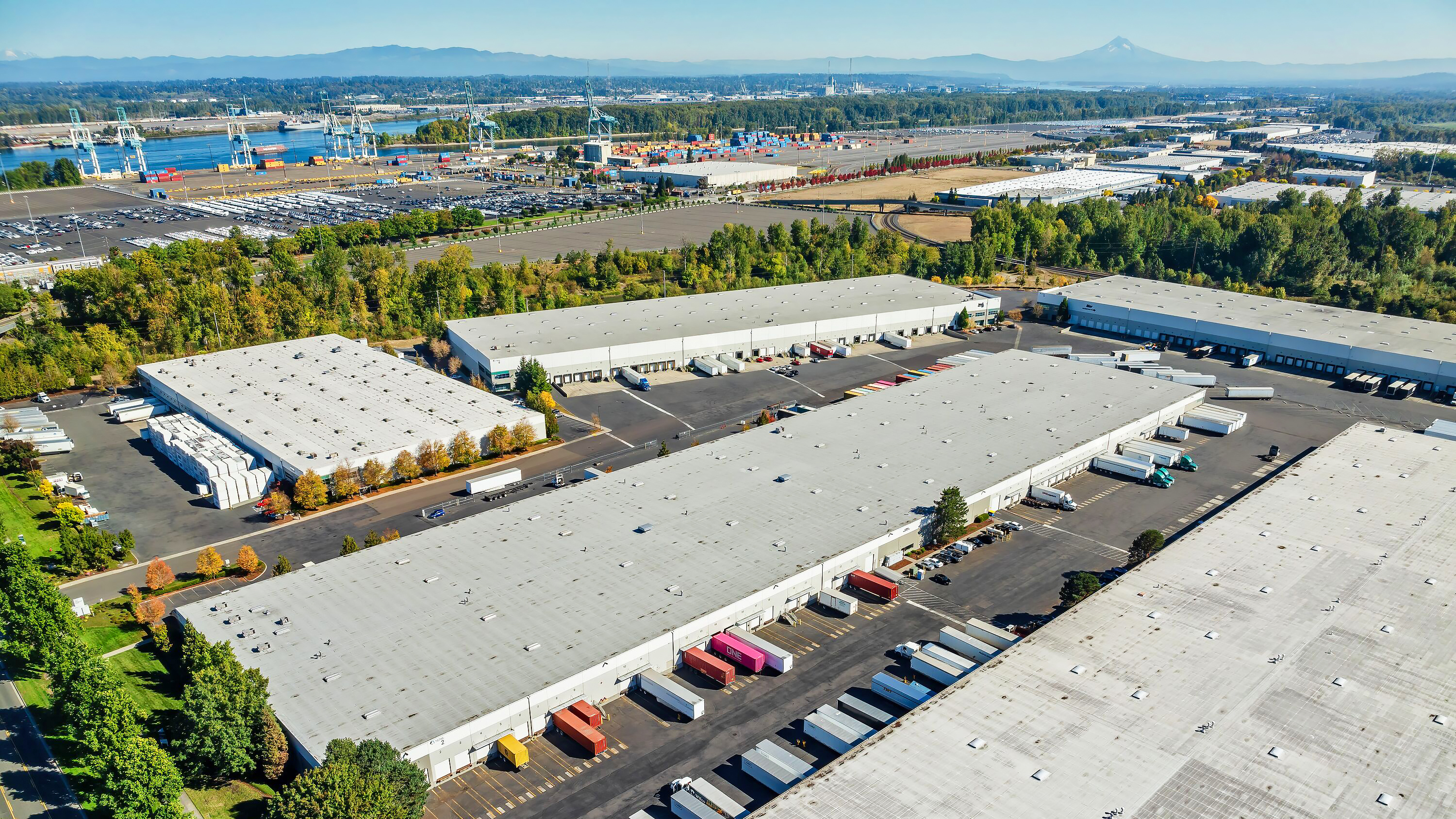
A third example: A multi-modal logistics property that integrates rail, road, sea or air freight. For instance, a facility near a major port with rail connectivity allows inbound ocean containers to be unloaded, goods stored or cross-docked, then dispatched via rail to inland distribution or via trucks to regional nodes. Such logistics property supports international supply-chain flows, import/export operations, and value-added services (e.g., light assembly, labelling, packaging).
The relevance: in an era of global trade, these logistics properties are essential. They bridge international freight movement with regional distribution, thereby reducing supply-chain complexity, cost and transit time.
Benefits of Leveraging Global Logistics Properties
Operational Efficiency
Modern logistics properties allow businesses to reduce transit distances, better match inventory to demand, and optimise loading/unloading operations. With the right design (dock doors, bay depth, clear height) and technology (automation, sensors, warehouse management), companies can increase throughput, reduce handling times, minimise errors and lower unit costs.
Speed to Market & Customer Service
By having strategically located inventory-holding facilities, companies can respond faster. Shorter distances to end-users mean faster delivery, higher customer satisfaction, and lower shipping costs. For e-commerce, this is a competitive advantage. Also, flexibility in properties allows firms to ramp up or scale down as demand fluctuates.
Supply-Chain Resilience & Risk Mitigation
Having a network of logistics properties across multiple geographies reduces dependency on one region and provides fallback options. When disruptions occur, whether due to natural disasters, geopolitics, labour shortages, or transportation delays, flexibility to shift operations to another facility mitigates risk.
Cost Savings & Asset Value Creation
While real estate involves capital expenditure, the right logistics property can deliver ongoing cost savings through reduced transit, better utilisation, lower inventory holding and improved asset performance. Owners of logistics properties benefit from tenant demand, especially as logistics becomes a strategic asset class in real-estate portfolios.
Technology & Sustainability Integration
New logistics properties increasingly integrate automation, IoT, energy-efficient designs, solar power and other sustainability features. This not only improves operational quality but also aligns with ESG (environmental, social, governance) goals. Tenants seek high-quality buildings that support their carbon-reduction targets and ensure long-term viability.
Use Cases: What Problems Do Global Logistics Properties Solve?
Use Case 1: E-commerce scaling under seasonal peaks.
An online retailer experiences significant seasonal demand spikes (for example, during holidays). Without appropriately located logistics properties, the firm may face stock-outs, long delivery times, high shipping costs or overwhelmed fulfilment centres. By securing strategically situated logistics properties (regional warehouses + last-mile hubs), the company can position inventory closer to demand, ramp up capacity during peaks, and deliver faster. This solves the problem of under-capacity or inefficient delivery network.
Use Case 2: Global manufacturer seeking supply-chain flexibility.
A manufacturing company sources components globally and ships finished goods to markets across continents. When one region experiences disruption (e.g., port congestion, labour strike, regulatory delay), the manufacturer needs alternate routes or storage close to the market.t Having access to logistics properties in multiple nodes (for example, in Asia, Europe, and the Americas) enables the company to pivot inventory, reroute flows or hold buffer stock in advance. This solves the problem of single-point failure and enhances resilience.
Use Case 3: Retailer expanding into emerging markets.
A retailer wants to serve a new emerging-market region (foexampleas,, Asia or Latin America). Building a new distribution network from scratch can be slow and costly. Instead, leasing or investing in logistics property in-region (a regional logistics park or warehouse) allows faster market entry, local inventory holding, and servicing local customers with shorter lead times. This solves the problem of market access, high import costs, long transit times and local-distribution complexity.
Use Case 4: Sustainability & ESG goals for a logistics operation. or
A logisti cs service provider (3PL) wants to attract high-quality clients that demand green buildings, energy efficiency and technology-integrated operations. By operating logistics properties that have solar panels, electric-vehicle charging infrastructure, automation, energy-efficient design and data-insights dashboards, the operator can win competitive contracts. This solves the problem of meeting client ESG expectations, controlling operating costs and future-proofing their portfolio.
Challenges and Considerations
Despite the advantages, investing in or utilising global logistics properties comes with key considerations:
- Capital intensity: Building or leasing logistics properties involves significant upfront investment, land cost, construction, fit-out and infrastructure.
- Location risk: Choosing the wrong location (poor connectivity, far from clients or transport nodes) may reduce value and increase costs.
- Tenant mix and lease risk: For property owners, tenant leasing risk, occupancy rates and lease terms matter. For users (tenants) of property, fitting the building to operational needs (bay depth, automation readiness) is critical.
- Technology obsolescence: As warehouse automation, robotics and IoT evolve fast, properties must be adaptable. A building built today may become sub-optimal in 5-10 years if not designed flexibly.
- Market fluctuations & macro risk: Logistics real-estate values are influenced by interest rates, e-commerce growth, supply-chain trends, regulation and regional economic performance.
- Sustainability compliance: As regulation tightens (energy codes, emissions, waste), logistics properties must invest to meet standards, which can increase cost.
Strategic Outlook: The Future of Global Logistics Properties
Looking ahead, several trends are shaping the landscape:
- Automation and robotics will become standard in newer logistics properties, driving faster processing, lower labour dependency and greater throughput.
- Last-mile delivery infrastructure will expand: urban logistics properties, micro-fulfilment centres, and even automated lockers or drone hubs will proliferate in dense markets.
- Cross-border/international logistic hubs will intensify supply chains and diversify (near-shoring, regionalisation). Firms will seek properties in multiple continents to hedge risk.
- Sustainability & ESG will be deeply embedded: buildings will incorporate renewable energy, green materials, energy-efficient HVAC systems, and aim for carbon-neutral operations.
- Digital twin and data-driven operations: logistics properties will integrate sensors, real-time data analytics, AI-based inventory and flow management, enabling smarter operations.
- Flexible lease models and use-case diversification: properties will be tailored for mixed-use (distribution + value-added services) and might offer flexible leasing terms to tenants as operations change rapidly.
- Emerging market expansion: growth will come from regions such as Southeast Asia, India, Latin America and Africa, where logistics infrastructure remains under-penetrated. Firms like GLP are already active globally.
Summary
Global logistics properties are more than mere real estate; they are strategic assets underpinning modern supply chains, e-commerce operations, and global trade flows. With the right location, building design, technology integration and network strategy, such properties deliver operational efficiency, speed, resilience and sustainability. Real-world use cases from global logistics parks to last-mile urban hubs and multimodal terminals illustrate how they solve problems like seasonal surges, global expansion, supply-chain disruption and ESG compliance. While challenges exist (capital intensity, location risk, technology changes), the strategic value is clear in a world where logistics drives competitive advantage.
Frequently Asked Questions
Q1: What distinguishes a “logistics property” from a standard warehouse?
A logistics property typically offers more than simple storage: it supports rapid movement of goods, incoming and outgoing flows, often close to transport nodes, has specialised design features (high clear height, multiple docks, automation readiness) and may integrate advanced technology and connectivity. In contrast, a standard warehouse might simply store goods with less focus on rapid turnover, last-mile delivery, and supply-chain integration.
Q2: Why is location so critical for logistics real estate?
Location affects transit times, cost of delivery, access to markets, connectivity to transport infrastructure (ports, rail, highways) and ability to serve end-customers. A poorly located property may add cost and time, weakening the supply-chain advantage. The proximity to labour, clients, transportation corridors and growing markets also matters greatly.
Q3: How are logistics property owners adapting to changing tenant needs and technology?
Owners are designing buildings with flexibility (to allow re-configuration), adopting sustainable construction (solar panels, energy management), integrating automation infrastructure (robotics-friendly layout, mezzanines, clear heights), investing in digitalisation (IoT sensors, building-management systems), and offering value-added services (e.g., light manufacturing, kitting, cross-dock operations). These adaptations help meet the evolving needs of tenants and ensure the asset remains competitive long-term.